
You accepted the offer.
Don't celebrate the sale just yet.
An accepted offer means your Royal Oak home is under contract.
It does not mean the transaction is guaranteed to close.
Inspection, appraisal, buyer financing, title and the terms written into the purchase agreement can still affect what happens next.
And this is where something we established in How Do Buyers Decide What to Offer on a Home in Royal Oak? becomes important:
The highest offer is not automatically the strongest offer.
The price on the first page matters.
So does the buyer's ability to get from accepted offer to closing.
An Accepted Offer Is Not the Finish Line
Sellers naturally focus on getting the offer.
It makes sense.
You prepared the home.
Presented it.
Priced it.
Marketed it.
Created buyer interest.
Evaluated the offer.
Negotiated the terms.
Then everyone signed.
But the seller strategy doesn't stop there.
The transaction now moves into another stage.
Depending on the terms of the purchase agreement, that can include:
Inspection.
Appraisal.
Financing.
Title.
Contractual deadlines.
Closing requirements.
Each one can affect whether the transaction reaches closing on the terms originally negotiated.
This is why I don't evaluate an offer based on purchase price alone.
The offer you accept becomes the contract you have to get to closing.
The Strength of the Offer Matters After Acceptance
In Article #92, How Do Buyers Decide What to Offer on a Home in Royal Oak?, we looked at the layers of the seller strategy:
Preparation + Presentation + Pricing + Marketing + Buyer Demand + Representation + Negotiation
They work together.
That doesn't stop when an offer is accepted.
Now the terms we evaluated before acceptance become real.
What type of financing does the buyer have?
Is there an appraisal contingency?
What inspection protections were negotiated?
How much earnest money is involved?
What are the required deadlines?
Are there seller concessions?
What are the closing and occupancy terms?
What other contingencies exist?
Those details can matter just as much after acceptance as the purchase price mattered when the offer first arrived.
A higher offer with greater financing, appraisal or contingency risk can create a different path to closing than an offer with stronger terms.
That's why representation includes more than negotiating the highest number.
It includes understanding what you're accepting.
Inspection Can Reopen the Negotiation
The home inspection is often one of the first major steps after an offer is accepted.
The buyer has now committed to the transaction based on the terms of the purchase agreement.
Then they inspect the property.
If issues are discovered, the buyer's options depend on the contract.
That can create another decision point for the seller.
The buyer may proceed.
They may raise concerns.
They may request repairs, concessions or another resolution permitted under the contract.
Or they may have a contractual right to terminate within the inspection period.
This is why What Repairs Matter Before Listing in Royal Oak? is part of the seller strategy.
Preparing for the market isn't about fixing every item in a home.
It is about understanding which issues could affect buyer confidence, value or the transaction.
The same applies to How Do Updates and Condition Affect My Home's Value in Royal Oak, Michigan?
Condition doesn't stop mattering because the buyer wrote an offer.
Inspection can bring it directly back into the negotiation.
And the seller's response should depend on the actual situation.
What was discovered?
Is it a significant issue?
What does the purchase agreement provide?
What is the buyer requesting?
What would resolving it cost?
Do we have other buyer interest?
What happens if this transaction doesn't move forward?
Those questions matter.
An inspection request isn't automatically something a seller should accept.
And it isn't automatically something a seller should reject.
It has to be evaluated within the complete transaction.
A Low Appraisal Can Change the Deal
An accepted purchase price and an appraised value are not the same thing.
When financing requires an appraisal, the lender typically orders an independent appraisal of the property.
If the appraisal supports the contract price, the transaction can continue through the financing process.
If it doesn't, another decision may have to be made.
Depending on the purchase agreement and financing terms, possible outcomes can include the buyer bringing additional funds, the seller adjusting the price, the parties negotiating another solution, or the buyer exercising applicable contractual rights.
This connects directly back to Which Comparable Sales Should I Use to Determine My Royal Oak Home's Value?
Comparable sales matter when establishing market value before listing.
They can matter again during appraisal.
It also reinforces the distinction in What Is My Royal Oak Home Worth?
Market value, list price, contract price and appraised value are related—but they are not automatically the same number.
And because appraisal deserves more than a paragraph, it becomes our next deeper conversation in Article #94:
What Happens If My Royal Oak Home Appraises Below the Sale Price?
Buyer Financing Still Has to Reach Final Approval
A preapproval strengthens an offer.
It is not final loan approval.
After the offer is accepted, the lender continues underwriting the buyer and the property.
That process can include verification of income, employment, assets, debts, credit, appraisal and other loan requirements.
Changes or issues during underwriting can affect the buyer's ability to obtain the financing required to close.
The seller cannot control the buyer's finances.
But financing is one reason the structure of the offer matters when deciding which offer to accept.
A purchase price can look strong on paper.
The buyer still has to be able to close it.
Title Has to Be Ready for the Property to Transfer
Title is another part of the transaction that can affect closing.
Title work is reviewed to identify issues that may need to be resolved before ownership can transfer.
Those issues can include liens, ownership discrepancies or other matters affecting title.
Some title issues can be resolved before closing.
Others can require additional documentation, money or time.
The important distinction for a seller is this:
An accepted offer establishes a contract. It does not eliminate the remaining requirements necessary to transfer ownership.
Can a Buyer Back Out After an Offer Is Accepted?
This is one of the questions sellers ask most often once they're under contract.
The answer depends on the purchase agreement and the circumstances.
Inspection, financing, appraisal and other contingencies can provide contractual rights under specific conditions and within specific timeframes.
That does not mean a buyer can automatically terminate any purchase agreement without consequence.
It means the terms of the contract matter.
And those terms were established before the seller accepted the offer.
That brings us back to why the highest offer isn't automatically the strongest offer.
Price is one part of the decision.
The protections, contingencies, financing and other terms attached to that price also matter.
What Does the July 2026 Royal Oak Market Mean if a Deal Falls Apart?
The current market matters because if a transaction terminates, the seller may have to return the property to the active market.
In July 2026, Royal Oak had 202 residential homes for sale, an increase of 41.3% from July 2025.
Months supply increased from 1.9 to 2.6 months, while new listings increased 19.6%.
Pending sales declined 28.6% for the month. At the same time, year-to-date closed residential sales remained up 5.0%, and the year-to-date median sale price was up 3.4% to $382,500.
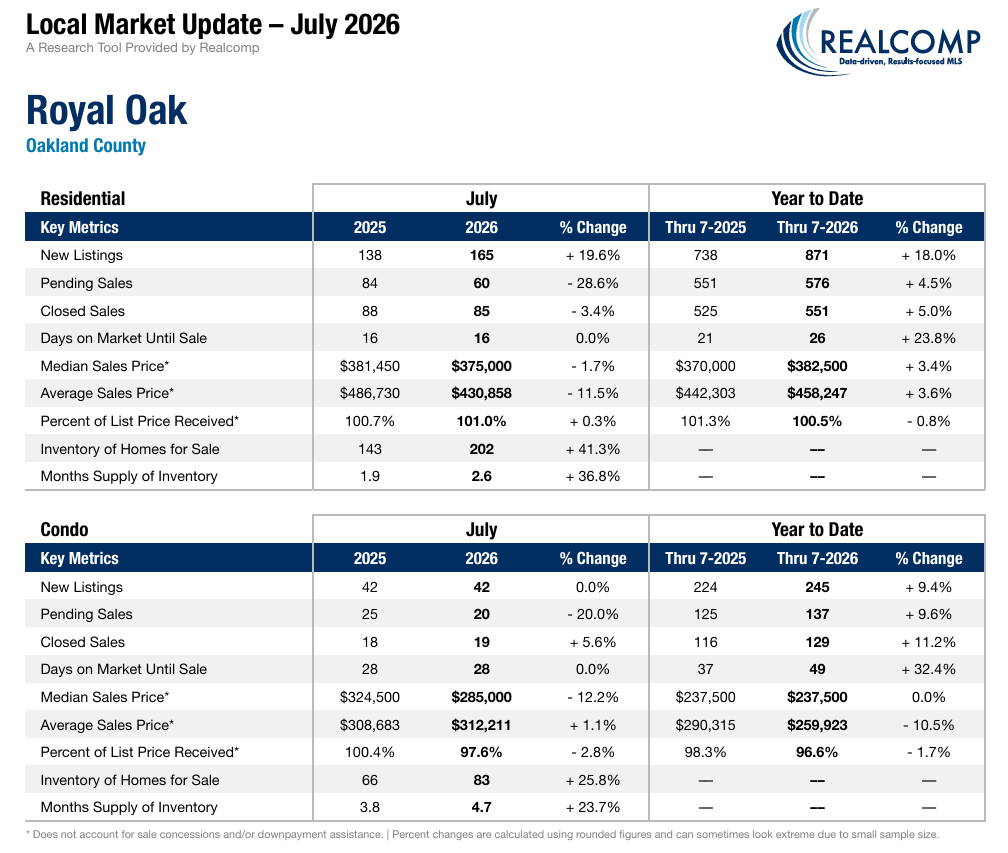
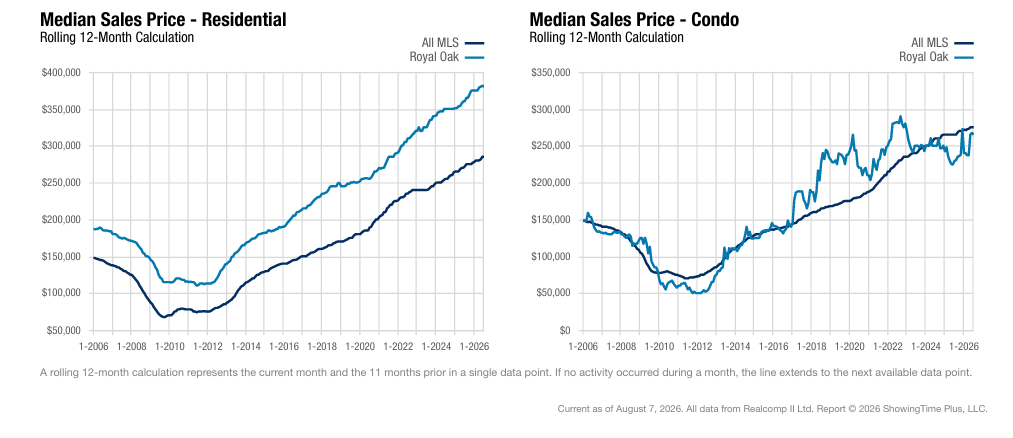
Figure 1. July 2026 Royal Oak Residential Market Snapshot — Source: Realcomp MLS
Buyers are still buying.
But Royal Oak sellers have more competing inventory than they did one year earlier.
That matters if a property has to return to the market.
The seller may be returning to a different competitive environment than the one that existed when the original offer was accepted.
That doesn't mean a seller should agree to every request simply to keep a transaction together.
It means the decision should be made with an understanding of the contract, the issue, the seller's position and the current market.
Getting Under Contract and Getting to Closing Require Different Strategy
Before the offer, the strategy is focused on creating the strongest possible market position.
Prepare.
Present.
Position.
Market.
Create demand.
Evaluate.
Negotiate.
After the offer is accepted, the objective changes.
Now we have to protect the seller's position while moving the transaction through the requirements of the contract.
Inspection.
Appraisal.
Financing.
Title.
Deadlines.
Closing.
And any negotiations that occur along the way.
Getting under contract is a milestone.
Getting to closing is the result.
And this is where representation becomes the next part of the conversation.
Because when something changes after acceptance, the seller needs more than someone tracking dates.
They need someone who understands the contract, the market, the seller's position and how the next decision can affect the outcome.
Representation Doesn't Stop When the Offer Is Accepted
Getting the home under contract doesn't end the seller's need for representation.
The strategy changes.
Before the offer, the focus was on preparing, presenting, positioning and marketing the property, creating buyer demand, evaluating the offer and negotiating the terms.
After acceptance, those negotiated terms become the framework for getting the transaction to closing.
Now the seller's agent has to help navigate what happens when new information enters the transaction.
An inspection uncovers an issue.
The buyer requests a concession.
The appraisal comes in below the contract price.
The lender needs additional time.
A title issue surfaces.
A contractual deadline approaches.
The buyer wants to change a term.
Each situation can affect the seller differently.
The question isn't simply:
“How do we keep the deal together?”
The question is:
“What does this mean for the seller, what does the contract provide, and what is the strongest next decision?”
That is representation.
Not Every Problem Means the Deal Is Falling Apart
A problem during the transaction does not automatically mean the sale is going to fail.
Issues come up.
What matters is the issue, the contract and the available options.
An inspection finding may be resolved.
An appraisal issue may be negotiated.
A lender may need additional documentation.
A title issue may be corrected.
A closing date may need to be adjusted.
The existence of a problem and the severity of the problem are not the same thing.
That's why I don't want a seller reacting to every issue as though the transaction is over.
I want to understand:
What happened?
What does the contract say?
What does the buyer want?
What options does the seller have?
What are the financial implications?
What leverage exists?
What happens if we agree?
What happens if we don't?
Then we make the decision.
The Seller Still Has Decisions to Make
Once an offer is accepted, sellers can feel as though the major decisions are behind them.
Not necessarily.
Consider an inspection request.
The buyer asks for a $7,500 concession.
The question isn't simply whether $7,500 is reasonable.
We also need to consider the issue behind the request, the terms of the agreement, the property's market position, previous buyer interest and the seller's alternatives.
The same applies to an appraisal problem.
If the appraisal is $10,000 below the contract price, the decision isn't automatically:
“The seller has to reduce the price.”
The contract matters.
The buyer's financial position matters.
Any appraisal protections matter.
The market evidence matters.
The seller's goals matter.
And the negotiation matters.
A problem creates a decision point. It doesn't automatically determine the decision.
Going Back on the Market Has Consequences Too
Sometimes a seller has every right to hold their position.
But there is another side of that decision:
What happens if the transaction ends?
The home may need to return to the market.
That means evaluating the market as it exists at that moment—not as it existed when the original offer was accepted.
Are the same buyers still looking?
Have competing homes entered the market?
Have other properties gone pending?
How much time has passed?
Will buyers have questions about why the property returned to active status?
Does anything need to be addressed before relaunching?
This doesn't mean the seller should make concessions simply because returning to market is inconvenient.
It means returning to market is one of the possible outcomes that should be evaluated before making the decision.
The goal isn't to save every transaction at any cost.
The goal is to understand the seller's options and the consequences attached to each one.
Can the Price Be Renegotiated After an Offer Is Accepted?
Potentially, yes.
An accepted purchase price does not mean the price can never change.
Inspection findings, appraisal results or another contractual issue can lead one party to request a change.
Whether the parties are required to make a change—or have the right to terminate—depends on the purchase agreement and the circumstances.
A request is not automatically an agreement.
The seller may accept it.
Reject it.
Counter it.
Or consider other available options under the contract.
This is another reason the original negotiation matters.
The terms agreed to before acceptance can determine the options available later.
The Highest Offer Can Look Different Two Weeks Later
This is where the lesson from Article #92 becomes very real.
Imagine receiving multiple offers.
One buyer offers the highest price.
Another offers slightly less but has stronger financing and fewer contractual risks.
On offer day, the highest number naturally gets attention.
Two weeks later, the picture may look different if the higher offer encounters an appraisal problem, financing issue or another contingency.
That doesn't mean sellers should automatically choose the lower offer.
It means offer strength has to be evaluated beyond price.
The question before acceptance isn't only:
“How much are they offering?”
It's also:
“How strong is the buyer's ability and commitment to get this offer to closing?”
That is why How Do Buyers Decide What to Offer on a Home in Royal Oak? established that offer evaluation and representation are part of the same seller strategy.
Communication Matters Between Acceptance and Closing
A lot happens behind the scenes once a home is under contract.
The lender is working through underwriting.
The title company is completing title work.
Inspection and appraisal deadlines are being tracked.
Documents may need to be signed.
Questions can move between the buyer, seller, lender, title company and agents.
Problems are easier to address when they are identified and communicated.
This doesn't mean every routine update requires the seller's involvement.
It means the transaction needs to be actively managed so the seller understands the issues that actually require a decision.
The seller shouldn't have to discover a problem at the closing table that could have been addressed earlier.
The Signature by Lisa Contract-to-Close Strategy
Article #92 established the strategy before and through the offer:
Prepare. Present. Position. Market. Create demand. Evaluate. Negotiate.
Once the offer is accepted, the strategy continues.
Monitor. Interpret. Communicate. Evaluate. Negotiate. Resolve. Close.
Monitor
Know the contractual deadlines and where the transaction stands.
Interpret
When something changes, understand what it actually means for the seller.
Communicate
Get the necessary information from the buyer's agent, lender, title company or other parties involved.
Evaluate
Look at the issue within the complete transaction—not in isolation.
Negotiate
When terms need to be addressed, understand the seller's position and available leverage.
Resolve
Move the transaction toward a solution when one makes sense for the seller.
Close
The transaction is not complete until ownership transfers and the closing is completed.
Accepted is a milestone. Closed is the result.
Representation Matters Most When the Transaction Stops Being Easy
When everything goes according to plan, the path from accepted offer to closing can look straightforward.
Representation becomes much more visible when something changes.
That's when the seller needs someone to distinguish between a routine issue and a material problem.
To understand the contract.
To gather information.
To evaluate the seller's position.
To communicate with the other side.
To negotiate when necessary.
And to help the seller make a decision based on the actual circumstances rather than fear of losing the transaction.
The objective isn't to guarantee that every accepted offer closes.
No agent can guarantee that.
The objective is to manage the transaction strategically when something threatens the outcome.
The Signature by Lisa Perspective
An accepted offer doesn't end the strategy.
It changes the strategy.
Before acceptance, we're building the seller's position.
After acceptance, we're managing and protecting that position through the contract.
Inspection.
Appraisal.
Financing.
Title.
Deadlines.
Renegotiations.
Closing.
They aren't administrative details sitting between the offer and the closing table.
They are part of the sale.
And how those stages are navigated can affect the seller's final outcome.
The Next Question: What Happens If the Appraisal Comes in Low?
One of the most stressful moments for a seller can happen after they've already negotiated a strong offer:
The appraisal comes back below the agreed-upon sale price.
Does the seller have to reduce the price?
Does the buyer have to bring the difference?
Can the appraisal be challenged?
Can the transaction fall apart?
That's our next conversation:
What Happens If My Royal Oak Home Appraises Below the Sale Price?
Frequently Asked Questions
Can a buyer back out after an offer is accepted on a Royal Oak home?
Potentially. A buyer's ability to terminate depends on the purchase agreement, applicable contingencies, contractual deadlines and the circumstances. Inspection, financing, appraisal and other negotiated terms may provide termination rights under specific conditions.
What is the most common reason for a house sale to fall through?
There is no single reason that applies to every transaction. Inspection issues, financing problems, low appraisals, title issues and contractual contingencies can all prevent an accepted offer from reaching closing.
Can the house price be negotiated after an offer has been accepted?
It can be renegotiated if the parties agree or if circumstances under the purchase agreement create another negotiation, such as an inspection or appraisal issue. An accepted price does not mean either party can unilaterally change the contract.
What happens if a Royal Oak home appraises below the sale price?
The options depend on the purchase agreement and financing terms. The buyer may bring additional funds, the seller may agree to adjust the price, the parties may negotiate another solution, or applicable contractual rights may allow the transaction to terminate.
Can buyer financing fall through after preapproval?
Yes. A preapproval is not final loan approval. The lender continues underwriting the buyer and property after the offer is accepted, and changes involving income, employment, assets, debts, credit, appraisal or other loan requirements can affect final approval.
Should a seller agree to an inspection request to keep the deal together?
Not automatically. The seller should evaluate what was discovered, what the buyer is requesting, what the purchase agreement provides, the cost of the request, the current market and the consequences of agreeing, negotiating or allowing the transaction to terminate if permitted by the contract.
Conclusion
An accepted offer is an important milestone.
It is not a closed sale.
Inspection, appraisal, financing, title and contractual requirements still have to be completed.
Problems during those stages don't automatically mean the transaction will fall apart.
They create decisions.
And those decisions need to be evaluated within the complete transaction.
Closing Thoughts
You accepted the offer.
Now you have to get it to closing.
The strongest strategy doesn't end when the purchase agreement is signed.
It continues through every inspection issue, appraisal question, financing update, contractual deadline and negotiation that happens afterward.
Getting under contract is a milestone.
Getting to closing is the result.
Thinking About Selling Your Royal Oak Home?
A successful sale requires more than getting an offer.
From preparation and pricing through negotiation and contract-to-close, each stage can affect the final outcome.
My approach is to build the seller's position before launch and continue managing that position through closing.
Home selling Guide in the Woodward Corridor
About Lisa A. Mills
Lisa A. Mills is a REALTOR®, founder of Signature by Lisa, and is affiliated with National Realty Centers | Powered by JMG. She specializes in helping Metro Detroit homeowners confidently navigate life's transitions through strategic planning, local market expertise, and innovative digital marketing.
Known as The Calm Strategist When Life Shifts, Lisa believes selling a home begins with understanding—not assumptions. Through thoughtful preparation, strategic pricing, and a focus on buyer confidence, she helps homeowners make informed decisions that lead to stronger outcomes.