One of the biggest questions homeowners ask before making their next move is whether they should sell their current home before buying another one.
The answer is...
It depends on your financial situation, your comfort with uncertainty, and today's local market conditions.
Selling first offers financial clarity. You'll know exactly how much equity you have available, what you can comfortably afford, and you'll eliminate the risk of carrying two mortgage payments.
Buying first offers convenience. You may be able to move directly from one home into the next without arranging temporary housing or making multiple moves.
Neither strategy is automatically right or wrong.
The better question isn't simply, "Should I sell first?"
It's...
"Which approach creates the greatest confidence for my transition?"
Every homeowner's financial picture, timeline, and goals are different. The best decision is the one that aligns with your circumstances—not someone else's.
If you're still deciding whether now is the right time to make a move, you may also find Do I Sell or Wait in Royal Oak? helpful before deciding which strategy is right for you.
Royal Oak Market Snapshot
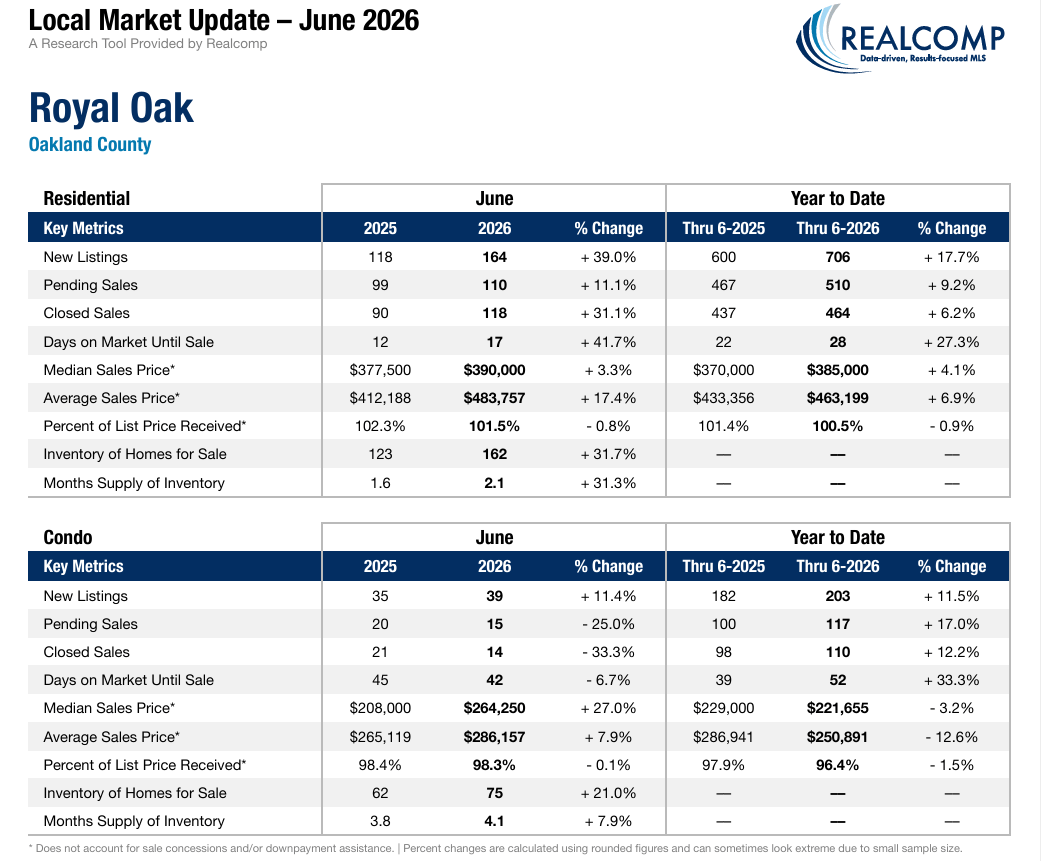
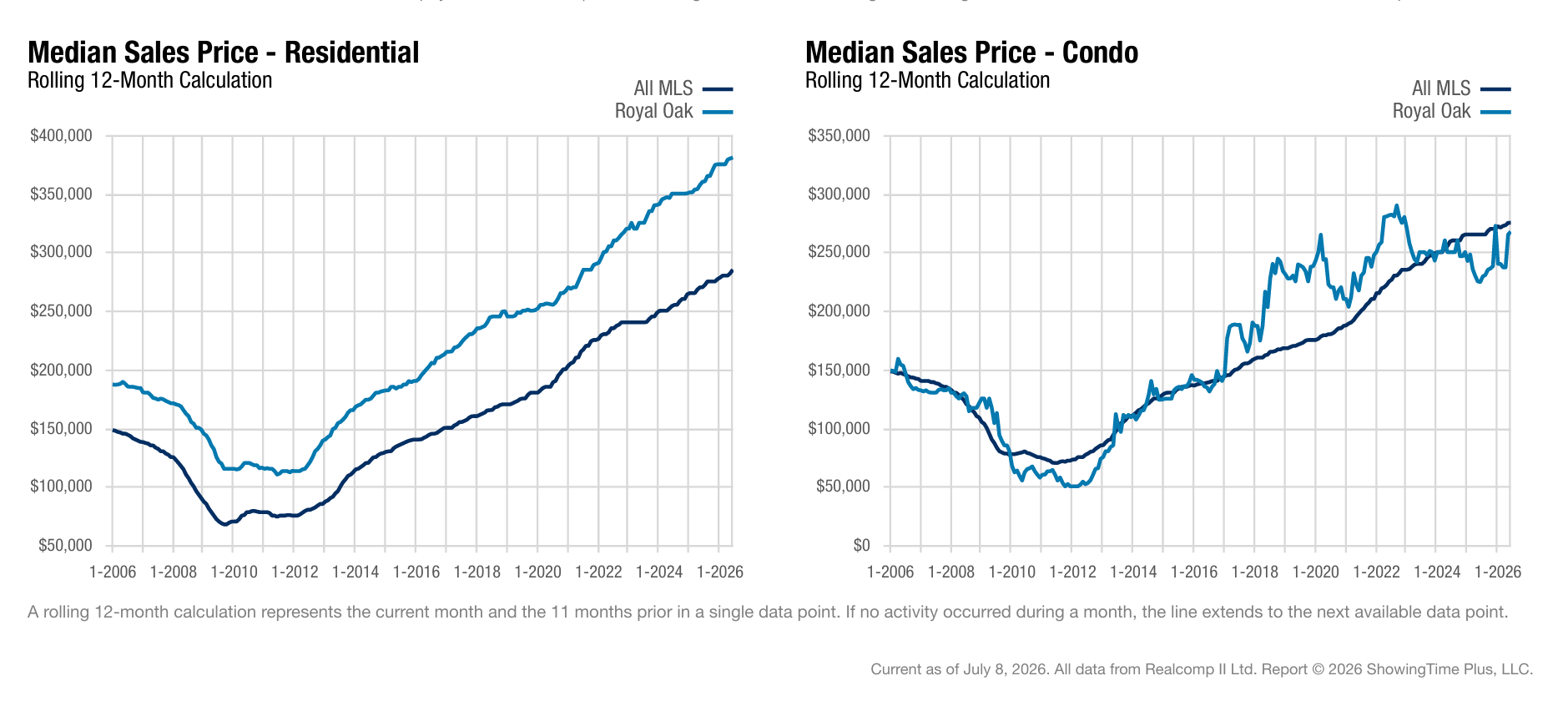
Figure 1. June 2026 Royal Oak Residential Market Snapshot (Source: Realcomp MLS)
What the Current Royal Oak Market Means for Sellers
Before deciding whether to sell before buying, it's important to understand today's local housing market.
According to the June 2026 Realcomp Market Report, the average residential home sold in Royal Oak for $483,757, while the median sales price reached $390,000. Homes averaged 17 days on the market, sellers received an average of 101.5% of their list price, and inventory remained low at just 2.1 months of supply.
Those statistics tell us buyers are still actively competing for well-prepared homes, but they don't automatically answer whether selling first is the best strategy.
The market creates opportunity.
Your finances, timing, and long-term goals determine which path makes the most sense.
Selling Before Buying: The Advantages
For many homeowners, selling first provides the greatest financial certainty.
Once your current home closes, you'll know exactly how much equity you'll have available for your down payment, closing costs, moving expenses, and your next monthly mortgage payment.
Selling first can also strengthen your position when you're ready to purchase your next home. Without a home sale contingency, your offer may be viewed more favorably by sellers because there are fewer moving parts that could delay or prevent the transaction from closing.
Other advantages include:
Knowing your exact home-buying budget before you begin shopping.
Reducing the risk of carrying two mortgage payments.
Eliminating uncertainty about what your current home will sell for.
Providing your lender with a complete financial picture before purchasing your next home.
Allowing you to make decisions based on facts rather than estimates.
The biggest challenge, of course, is timing.
If your current home sells before you've found your next one, you'll need a plan for where you'll live during the transition.
Fortunately, there are several strategies that can help bridge that gap, which we'll discuss later in this article.
Buying Before Selling: The Advantages
For some homeowners, purchasing their next home before selling their current one offers greater convenience and peace of mind.
Instead of coordinating two separate moves or arranging temporary housing, you can often move directly into your new home before preparing your current home for the market.
This approach may also give you more time to make repairs, paint, declutter, or stage your existing home without living through the disruption of showings.
Buying first may be a good fit if you have the financial flexibility to qualify for another mortgage or have financing options available that allow you to carry both homes temporarily.
However, this strategy also comes with additional financial considerations. Carrying two mortgage payments, utilities, taxes, insurance, and maintenance costs—even for a short period—can create added pressure if your current home doesn't sell as quickly as anticipated.
That's why there's no one-size-fits-all answer.
The right approach isn't determined by the market alone. It's determined by your financial situation, your comfort with uncertainty, and the plan you put in place before either transaction begins.
What If Selling First Means You Don't Have a New Home Yet?
One of the biggest reasons homeowners hesitate to sell before buying is the fear of not finding their next home before closing.
It's a valid concern.
After all, no one wants to feel like they're caught between two homes wondering where they'll live next.
The good news is that selling first doesn't mean you're out of options. With proper planning, there are several strategies that may help bridge the gap between selling your current home and purchasing your next one.
Depending on your financial situation and goals, those options may include:
Bridge Loans: Some mortgage lenders offer bridge loans specifically designed to provide short-term financing between the sale of your current home and the purchase of your next one. Qualification requirements, loan terms, and costs vary by lender, so it's important to consult a licensed mortgage professional to determine whether this option is appropriate for your situation.
Borrowing from a 401(k): Some employer-sponsored retirement plans allow participants to borrow against a portion of their vested retirement balance. While this may provide temporary access to funds for a down payment, it's important to understand the repayment requirements, potential tax implications, and how it could affect your long-term retirement goals. Always consult your financial advisor or plan administrator before making this decision.
Negotiating Post-Closing Occupancy: Sometimes referred to as a lease-back or occupancy agreement, this allows a seller to remain in the home for an agreed-upon period after closing. Depending on the terms negotiated within the purchase agreement, this can provide valuable time to complete the purchase of your next home without making two moves.
Temporary Housing: Some homeowners choose to rent for a short period, stay with family, or secure furnished short-term housing while they search for their next home. While it may require an additional move, it can also remove the pressure of rushing into a purchase simply because you need a place to live.
The right solution isn't the same for everyone.
It depends on your finances, your timeline, your comfort with uncertainty, and the strategy you build before your home ever hits the market.
The Signature by Lisa Perspective
One of the biggest misconceptions I hear is that homeowners are trying to decide whether they should sell first or buy first.
I don't think that's the real decision.
After helping hundreds of Metro Detroit homeowners navigate this transition, I've found most people aren't afraid of selling first.
They're afraid of what happens next.
"What if I don't find something?"
"What if I'm homeless for a while?"
"What if the perfect house comes on the market tomorrow?"
"What if everything falls apart?"
Those questions are completely understandable.
But I've also found they usually come from looking at the move as a series of separate transactions instead of one carefully planned transition.
Clarity doesn't come from hoping everything works out.
Clarity comes from having a well-thought-out plan, a strategy, and an approach that's built around your financial story, your timeline, and what matters most to you.
That's why no two clients receive the same advice.
Some choose to buy first.
Some choose to sell first.
Some use a bridge loan through their mortgage lender. Others negotiate post-closing occupancy, arrange temporary housing, or explore whether borrowing from a 401(k) is an option.
The question isn't...
"Should everyone sell first?"
The question is...
"What strategy gives you the greatest confidence as you move from one chapter of your life to the next?"
That's where experience matters.
A Real-World Example
One of my recent clients, Barrett, decided selling first was the strategy that gave her the greatest peace of mind.
Before we listed her home, we talked through the entire transition—not just the sale. We discussed her financial goals, timeline, and what would help her feel most confident throughout the process.
Selling first allowed her to know exactly how much equity she had available before purchasing her next home.
Once her home sold, we immediately shifted our focus to finding the right replacement property.
Within two weeks of closing, she found the home she wanted, and we're now moving through the inspection process.
To make the transition even smoother, we negotiated a 60-day post-closing occupancy agreement as part of her sale. That allowed her to remain in her home after closing while completing the purchase of her next one, eliminating much of the stress homeowners often fear when selling first.
I've also represented clients who chose the opposite approach. They purchased their next home before selling because that better aligned with their financial situation, lending options, and comfort level.
Neither strategy was the "right" one.
Each was the right strategy for that client.
That's why I believe successful moves don't happen by chance.
They happen because there's a thoughtful plan, realistic expectations, and someone helping connect all the moving pieces before they become stressful.
If you're preparing to sell before buying, I also recommend reading How Much Does It Cost to Sell a Home in Royal Oak? to better understand your potential net proceeds before making your next move. After you've developed your transition strategy, continue with Best Time to Sell a Home in Royal Oak to learn how seasonality and market conditions may influence your timing.
Frequently Asked Questions
Is it better to sell my home before buying another one?
There isn't a one-size-fits-all answer. Selling first can provide greater financial certainty and may strengthen your position when making an offer on your next home. Buying first may offer greater convenience if you have the financial flexibility to carry two homes temporarily. The best approach depends on your financial situation, timeline, and personal goals.
What is a bridge loan?
A bridge loan is a short-term financing option offered by some mortgage lenders to help homeowners purchase a new home before the equity from their current home becomes available. Qualification requirements and loan terms vary, so speak with a licensed mortgage lender to determine whether this option is appropriate for you.
What is a post-closing occupancy agreement?
A post-closing occupancy agreement allows the seller to remain in the home for an agreed-upon period after closing. Depending on the purchase agreement, this can provide additional time to complete the purchase of your next home and reduce the stress of coordinating two moves.
Can I use my 401(k) to help buy another home?
Some employer-sponsored retirement plans allow participants to borrow against a portion of their vested balance. Whether this is a good option depends on your individual financial circumstances, your retirement plan's rules, and advice from your financial advisor.
Should I buy or sell first in today's Royal Oak market?
The answer depends on much more than market conditions. Your available equity, financing options, comfort with uncertainty, and long-term goals all play an important role in determining which strategy is the best fit for your transition.
Conclusion
Deciding whether to sell before buying isn't simply about timing the market.
It's about creating a strategy that supports your financial goals, reduces unnecessary stress, and gives you confidence throughout the moving process.
While today's Royal Oak market continues to provide opportunities for well-prepared sellers, the best decision is rarely the same for everyone.
Whether you choose to sell first or buy first, thoughtful planning before either transaction begins can make the entire experience smoother, more predictable, and less overwhelming.
For additional guidance, continue reading Best Time to Sell a Home in Royal Oak and follow my Royal Oak Real Estate Market Update to stay informed about changing local market conditions.
Closing Thoughts
After helping hundreds of Metro Detroit homeowners buy and sell real estate, I've learned that people rarely regret having a plan.
They regret making decisions based on fear.
The question isn't whether selling first or buying first is better.
The question is whether the strategy you've chosen supports your goals, your finances, and the life you're trying to build next.
Because moving isn't just about changing addresses.
It's about navigating one chapter of your life into the next with clarity and confidence.
That's why I believe every successful move begins with a conversation—not just about real estate, but about the transition itself.
About Lisa A. Mills
Lisa A. Mills is a Metro Detroit REALTOR®, marketing strategist, and founder of Signature by Lisa. She helps homeowners throughout Royal Oak, Birmingham, Berkley, Clawson, and surrounding Metro Detroit communities make confident real estate decisions through strategic planning, local market expertise, and innovative marketing.
Known as The Calm Strategist When Life Shifts, Lisa believes buying and selling a home isn't simply about completing two transactions. It's about creating one successful transition. By helping clients replace uncertainty with clarity and developing strategies tailored to their unique financial goals and timelines, she guides homeowners through one of life's biggest decisions with confidence.