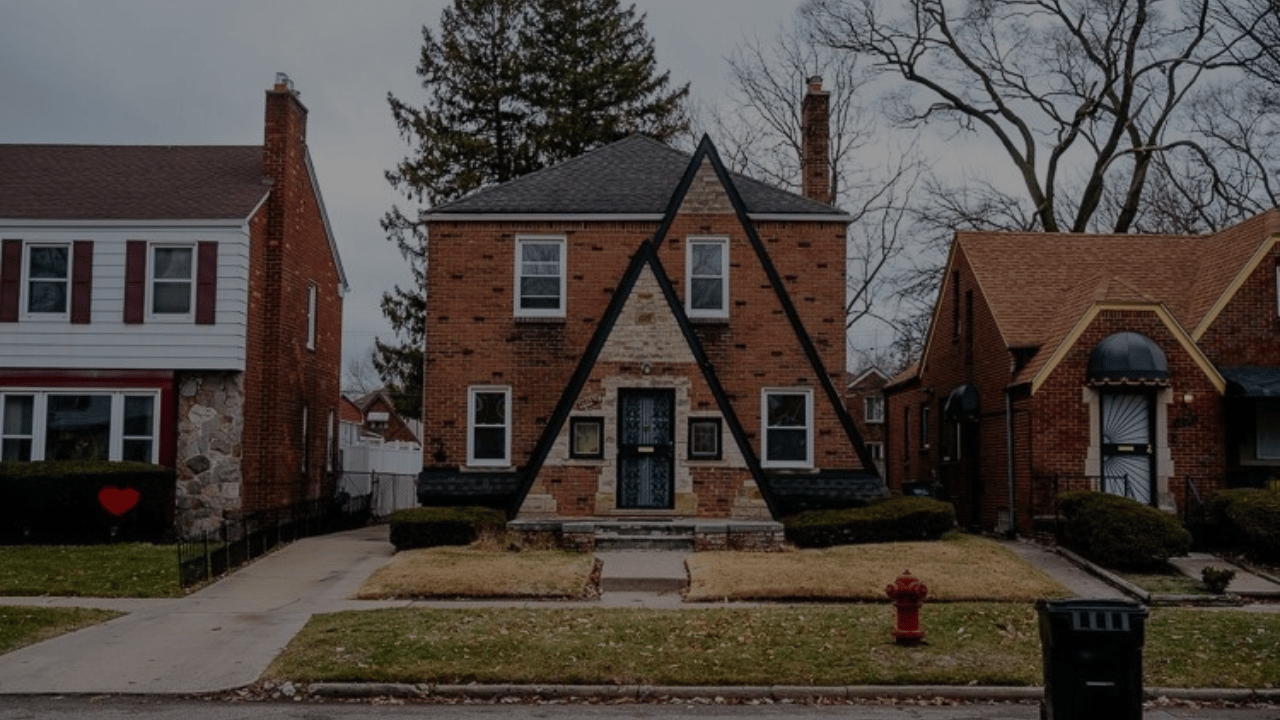
“The housing market is depressed.”
I've heard that from two different people recently.
And both times, my reaction was pretty immediate:
Which market?
Because I don't agree with the premise.
There isn't one Metro Detroit housing market.
There are markets within markets.
And describing all of Metro Detroit as “depressed” ignores what is actually happening on the ground.
Royal Oak isn't Detroit.
Detroit isn't Birmingham.
A condo isn't a single-family home.
A beautifully prepared property isn't experiencing the same market as a dated property that needs work.
A strategically positioned home isn't competing the same way as one that entered the market overpriced.
And a $200,000 buyer isn't necessarily behaving like a $700,000 buyer.
I see this in the field.
I see properties generate attention, showings and offers while another property—sometimes in the same general market—struggles to create urgency.
I see buyers become aggressive when they believe a home is positioned well.
I see those same buyers become extremely cautious when condition, price or perceived value doesn't line up.
That's not one market.
That's property type + location + condition + preparation + price + positioning + competition + buyer demand all colliding at the same time.
So when somebody tells me:
“The market is depressed.”
I'm going to challenge the assumption.
Before a homeowner allows that statement to influence whether they sell, how they price their home or what they expect from buyers, we need to ask a much better question:
What is happening in the market your home is actually competing in?
The latest available August 2026 Realcomp data gives us a much better place to start than a broad headline.
And the numbers illustrate exactly why I believe there are markets within markets.
SECTION 1: What the August 2026 Market Data Actually Shows
Is the Oakland County Housing Market Depressed?
Let's start broadly.
According to Realcomp's August 2026 residential data for Oakland County, buyers had considerably more inventory available than they did one year earlier.
New residential listings increased 14.2%, from 1,695 in August 2025 to 1,935 in August 2026.
Residential inventory increased 21.5%, from 2,424 homes to 2,945.
Months supply increased from 2.3 months to 2.8 months, a 21.7% increase.
Buyers have more choices.
That's real.
But if we stop there and declare the market “depressed,” we're ignoring the rest of the data.
Oakland County's median residential sales price increased from $413,500 in August 2025 to $421,500 in August 2026, a 1.9% increase.
Median days on market actually moved from 23 days to 22 days.
And sellers received an average of 99.6% of list price, compared with 99.8% the previous August.
At the same time, pending sales were down 6.4% and closed sales were down 5.6% year over year.
So are conditions changing?
Yes.
Are buyers getting more choices?
Absolutely.
Does that automatically equal a “depressed housing market”?
No.
That's too simplistic.
The data tells us something much more useful:
The market is changing, and sellers have less room to ignore how their property competes.
More inventory doesn't mean buyers disappeared.
It means buyers have options.
And options change buyer behavior.
Now Let's Move From Oakland County Into Royal Oak
This is where markets within markets becomes even more obvious.
Royal Oak residential inventory increased from 142 homes in August 2025 to 212 homes in August 2026.
That's a 49.3% increase in inventory.
Months supply increased from 1.9 months to 2.8 months, up 47.4%.
That's substantially more inventory.
If “more inventory” automatically meant “depressed market,” we'd expect the rest of the Royal Oak numbers to tell the same story.
They don't.
The median residential sales price increased from $382,000 to $385,000 year over year.
Median days on market remained exactly 18 days.
And Royal Oak residential sellers received an average of 100.1% of list price in August.
Year to date, Royal Oak's median residential sales price increased from $370,000 in 2025 to $383,050 in 2026, a 3.5% increase.
That's why I don't look at one statistic and declare victory—or disaster.
I interpret what the numbers are telling us.
I explored these numbers more deeply in Royal Oak Housing Market Update: What August 2026 Means for Home Sellers.
The important takeaway is not that everything is wonderful.
It's that more inventory does not automatically mean the market stopped working for sellers.
It means buyers have more choices.
And sellers have to compete for those buyers more intentionally.
And There Is Another Market Inside Royal Oak
Now let's go one level deeper.
Because even saying “the Royal Oak housing market” can be too broad.
Look at condos.
Royal Oak condo inventory increased 28.1% year over year in August, while months supply increased from 3.7 to 4.5 months.
Condos that closed during August spent an average of 41 days on market.
Royal Oak residential properties?
18 days.
Same city.
Very different experience.
And there's another reason I don't like dramatic conclusions based on one number.
The Royal Oak August condo median sales price increased sharply year over year, while the year-to-date condo median price was actually down 3.0%.
Realcomp itself cautions that percentage changes can sometimes appear extreme because of small sample sizes.
So which number represents “the Royal Oak market”?
That's exactly my point.
There isn't one.
The question gets narrower:
What's happening with Royal Oak single-family homes?
What's happening with Royal Oak condos?
What's happening at this price point?
What's happening in this neighborhood?
What's happening with homes in this condition?
What's happening with the inventory competing against this particular property?
Now we're getting closer to the market that actually matters to an individual homeowner.
SECTION 2: There Are Markets Within Markets
YouTube Short: Is the Metro Detroit Housing Market Depressed?
Geography Is Only the First Layer
Metro Detroit covers very different communities and very different housing markets.
A seller in Royal Oak is not necessarily experiencing the same conditions as a seller in Detroit.
A seller in Birmingham isn't necessarily competing for the same buyer as a seller in Warren.
County-level data gives us context.
City-level data gets us closer.
But neither tells me everything I need to know about your house.
That's why I don't want to stop at:
“What's Metro Detroit doing?”
I want to know:
What's your market doing?
Property Type Creates Another Market
A single-family home.
A condo.
A townhouse.
A duplex.
A starter home.
A luxury property.
They aren't interchangeable.
They attract different buyers, different financing considerations, different levels of competition and different expectations.
We can see that directly in the Royal Oak August data.
Royal Oak residential properties and Royal Oak condos were experiencing dramatically different days on market.
Same city. Different market.
Condition and Preparation Create Another Market
This is where the statistics stop telling the entire story and my experience in the field matters.
Put two similarly sized homes in the same general neighborhood.
One is clean, prepared, photographed well and presented online in a way that creates confidence.
The other has deferred maintenance, clutter, poor presentation or obvious condition issues.
They may technically be in the same geographic market.
But buyers aren't necessarily experiencing them as equal choices.
Buyers begin making judgments before they ever walk through the front door.
Then the in-person experience either reinforces what they saw online—or breaks the confidence that got them through the door.
That's why preparation isn't about making a house perfect.
It's about understanding what buyers are going to see, where hesitation may begin and what matters enough to address before the home reaches the market.
Price and Positioning Create Another Market
This is a big one.
Because sellers sometimes hear “the market is slow” when what they're actually experiencing is:
The market isn't responding to this property at this price.
Those are not the same thing.
A strategically positioned home can create urgency.
An overpriced home can make buyers hesitate—even when they like it.
And when inventory increases, buyers have more opportunities to compare.
That's why pricing isn't simply choosing a number based on comparable sales.
Pricing is part of positioning.
I've written about this extensively in How Do Buyers Decide What to Offer on a Royal Oak Home? because buyers don't make decisions based on asking price alone.
They experience:
Preparation.
Presentation.
Price.
Competition.
Perceived value.
Demand.
And then they decide whether to act.
Prepare. Present. Position. Market. Create demand. Evaluate. Negotiate. One strategy.
Competition Can Change Your Market Without Your House Changing at All
This is one of the most important things sellers can understand.
Suppose three comparable properties are available when your home launches.
Two go pending.
Your competitive position just changed.
Now imagine three new competing listings hit the market.
Your buyer has more alternatives.
Your house didn't move.
The kitchen didn't change.
The square footage didn't change.
The market around your house changed.
That's why strategy can't stop the day the listing goes live.
I want to know what's happening around the property while we're on the market.
What's new?
What's pending?
What's reducing?
What's sitting?
What are buyers choosing?
Because the market isn't static.
Neither should the strategy be.
Buyer Behavior Is Market Data Too
Realcomp tells us what happened across a market.
The activity surrounding an individual listing tells us something different.
Are buyers seeing the property online?
Are they engaging with it?
Are they saving it?
Are they clicking through?
Are they scheduling showings?
Are they returning for second showings?
Are they writing offers?
And what are they choosing instead?
This is where the connected marketing strategy matters.
SEE → ENGAGE → RESEARCH → SAVE → TOUR → WRITE.
Every stage tells us something about buyer behavior.
And this is why I say:
Marketing creates exposure. The market tells us what that exposure means.
If buyers aren't seeing the property, we may have an exposure problem.
If they're seeing it but not engaging, that tells us something else.
If they're engaging but not touring, we keep interpreting.
If they're touring but not writing, we need to understand why.
I'm not interested in panicking over one quiet afternoon or one piece of feedback.
I'm looking for patterns.
The market is communicating with us. My job is to interpret what it's saying.
So What Does a “Depressed” Market Actually Mean for a Seller?
This is why I push back on the word.
Not because I'm trying to convince sellers that everything is fantastic.
I'm not.
There are absolutely properties taking longer to sell.
There are buyers with more choices.
There are sellers making concessions.
There are properties that aren't generating offers.
There are listings sitting.
That's real.
But there are also properties creating strong buyer interest, selling quickly and generating strong terms.
That's real too.
The mistake is taking one experience and turning it into a diagnosis for an entire region.
A changing market can mean buyers become more selective.
It can mean condition matters more.
It can mean preparation matters more.
It can mean poor presentation gets punished faster.
It can mean pricing mistakes become more obvious.
It can mean buyers have enough choices to say:
“No. I'll wait for the next one.”
That's not a reason for a seller to panic.
It's a reason to understand the market they're entering.
The Signature by Lisa Perspective
I don't think homeowners need another dramatic housing-market headline.
And I don't think they need someone standing in front of a camera telling them:
“It's a great time to sell!”
That's not analysis.
I want to know what the data says.
Then I want to get closer.
Oakland County.
Royal Oak.
Property type.
Neighborhood.
Price point.
Condition.
Preparation.
Competition.
Buyer behavior.
And finally:
Your house.
Because there isn't one Metro Detroit housing market.
There are markets within markets.
Broad data gives us context.
Local data gives us direction.
Your specific property is where strategy begins.
That's how we replace market noise with clarity.
The Next Question: What Is the Market Saying About Your Home?
Once your home reaches the market, the conversation becomes even more specific.
If you're getting exposure but buyers aren't responding the way we expected, the answer isn't automatically:
“Wait longer.”
And it isn't automatically:
“Reduce the price.”
We look at the evidence.
That's why the next question to understand is:
When Should I Reduce the Price of My Royal Oak Home?
A price reduction shouldn't be triggered simply because a certain number of days have passed.
It should be triggered by evidence.
Frequently Asked Questions
Is the Metro Detroit housing market depressed?
The available market data does not support treating Metro Detroit as one uniformly depressed housing market. Conditions vary by community, property type, price point, condition, inventory, competition and buyer demand. Sellers should evaluate the specific market their property would compete in rather than relying on one broad regional label.
Is the Metro Detroit housing market slowing down?
Some indicators show buyers have more choices and certain measures of activity have softened, but Metro Detroit is not one uniform housing market. Conditions can vary substantially by city, property type, price point, condition, inventory and buyer demand. Sellers should evaluate the specific market their property would compete in rather than relying only on a broad regional description.
Is Metro Detroit currently a buyer's market?
Market conditions vary across Metro Detroit, and a broad regional label may not accurately describe an individual seller's situation. Inventory, months supply, buyer demand, property type, price point and local competition should all be considered when evaluating the market for a specific home.
Is the Royal Oak housing market slowing down?
Royal Oak buyers had considerably more residential inventory available in August 2026 than one year earlier, but the median residential sales price remained slightly higher year over year and days on market remained at 18 days. The data suggests changing conditions and greater buyer choice rather than one simple conclusion that applies to every Royal Oak property.
Are Metro Detroit home prices falling?
Price trends vary by location and property type. In August 2026, Oakland County's residential median sales price was 1.9% higher than August 2025, while Royal Oak's residential median price was 0.8% higher. Individual communities, property types and price ranges can behave differently, which is why sellers should evaluate their specific competitive market.
Why can two homes in the same city experience different markets?
Property type, condition, preparation, price, location, competition and buyer demand can all affect how buyers respond to a home. Two properties in the same city may therefore experience different showing activity, days on market, negotiation and offer strength.
Should I wait to sell if I hear the housing market is slowing down?
Not automatically. Broad market conditions are only one part of a homeowner's decision. A seller should also consider the specific property's competitive market, current value, inventory, personal timing and what waiting would realistically change before deciding whether to sell now or later.
Conclusion
So, is the Metro Detroit housing market depressed?
I think that's the wrong way to look at it.
Because before we label an entire market, I want to know:
Which market?
Oakland County gives us one picture.
Royal Oak gives us another.
Royal Oak condos give us another.
Different price points create another.
Condition creates another.
Competition creates another.
And ultimately, your house has to compete inside its own market.
That's why I don't want a homeowner making a major financial decision because somebody at the gym, a friend, a neighbor, a television headline or a social-media post declared:
“The housing market is depressed.”
Let's look at the evidence.
Let's look at your competition.
Let's look at the property.
Let's look at the buyers.
Then let's determine what the market actually means for you.
Closing Thoughts
More inventory changes the conversation.
More buyer choice changes the conversation.
Neither automatically ends the conversation.
In fact, when a market becomes less forgiving, strategy matters more—not less.
You don't need to understand every housing statistic in Metro Detroit.
You need to understand the market your home is actually competing in.
That's where clarity begins.
Need Clarity About What This Market Means for Your Home?
If you're hearing that the market is “depressed,” “slow,” “shifting,” or “changing” and you're wondering what that actually means for your home, let's look at your market—not the headlines.
I'll look at your property, your immediate competition, current buyer behavior and the market you're actually competing in.
Then we'll separate the noise from the information that matters to your decision.
You don't need more market noise. You need clarity.
Let's Talk About Your Home
Have a question about your home, your market or your next move? Let's start with a conversation.
About Lisa A. Mills
Lisa A. Mills is a REALTOR®, founder of Signature by Lisa, and is affiliated with National Realty Centers | Powered by JMG. She specializes in helping Metro Detroit homeowners confidently navigate life's transitions through strategic planning, local market expertise, and innovative digital marketing.
Known as The Calm Strategist When Life Shifts, Lisa believes selling a home begins with understanding—not assumptions. Through thoughtful preparation, strategic pricing, and a focus on buyer confidence, she helps homeowners make informed decisions that lead to stronger outcomes.