“Let's price it a little higher so we have room to negotiate.”
I hear the logic.
If the home is worth around $475,000, list it at $499,000.
A buyer writes an offer below asking.
We negotiate.
And hopefully we land somewhere around $475,000.
HOLD UP, Sellers.
Buyers actually behave differently.
The majority of buyers who believe a home is overpriced aren't necessarily going to write a lower offer.
They may not write an offer at all.
They move on.
And some of the buyers who might have been interested at $475,000 may never see the home because their automated MLS search ends at $475,000.
Meanwhile, the buyers searching around $500,000 will see it.
But now they're comparing your home against the other homes they can buy for approximately $500,000.
If those homes offer more value, they don't have to negotiate yours down.
They can buy your competition instead.
That's the risk in pricing higher simply to create negotiating room.
You can't leave room for a negotiation that never begins.
The assumption is that buyers negotiate from whatever number the seller puts on the home.
List at $499,000.
Buyer thinks it's worth $475,000.
Buyer offers $475,000.
Seller counters.
Negotiation begins.
Sometimes that happens.
But I would never build a pricing strategy around assuming it will.
Buyers aren't looking at your home in isolation.
They're looking at everything else they can buy.
So when a buyer believes your home is priced too high, their only option isn't:
“How much less should I offer?”
They have another option:
Your competition.
They can schedule a showing somewhere else.
They can save your home and wait.
They can watch for a price reduction.
Or they can decide the value simply isn't there and move on.
After working with buyers through hundreds of showings, I've seen this behavior repeatedly.
Buyers will absolutely negotiate when they see a home they want and believe there's an opportunity to reach an agreement.
But when the gap between the asking price and their perception of value feels too large, many don't begin negotiating.
They eliminate the home.
That's a very different outcome.
And it's why I challenge the idea that deliberately adding money to the list price automatically creates negotiating room.
The seller may see room.
The buyer may see an overpriced home.
Your List Price Determines Which Buyers See Your Home
This is one of the most practical reasons to think carefully about “leaving room.”
Buyers don't all open Zillow every morning and search every home available in Royal Oak.
Many serious buyers are working with a real estate professional and have automated MLS searches established around their criteria.
Location.
Bedrooms.
Bathrooms.
Property type.
And importantly—
price.
Let's go back to our $475,000 example.
Suppose a buyer has been approved to purchase up to $475,000 and their automated search is set from $400,000 to $475,000.
Your home could be an excellent fit.
The location works.
The size works.
The condition works.
The buyer may even be willing to write a strong offer.
But you list at $499,000 because you want negotiating room.
That home may never enter their automated search results.
They aren't rejecting your home because they think it's overpriced.
They may never know it's for sale.
Now consider the buyer whose search extends to $500,000.
Your home does enter their search.
But that buyer is seeing something completely different.
They're seeing your home alongside the other properties available around $500,000.
Maybe those homes are larger.
More updated.
Have a better layout.
Offer another bathroom.
Have a finished basement.
Sit on a better lot.
Or simply present more perceived value at that price.
Now the seller isn't simply asking for an extra $24,000 with room to negotiate.
You've changed which homes you're asking your property to compete against.
That's why I keep coming back to this:
You didn't create room. You changed the competition.
What the Current Royal Oak Market Means for Sellers
Pricing decisions also have to reflect the market the home is entering.
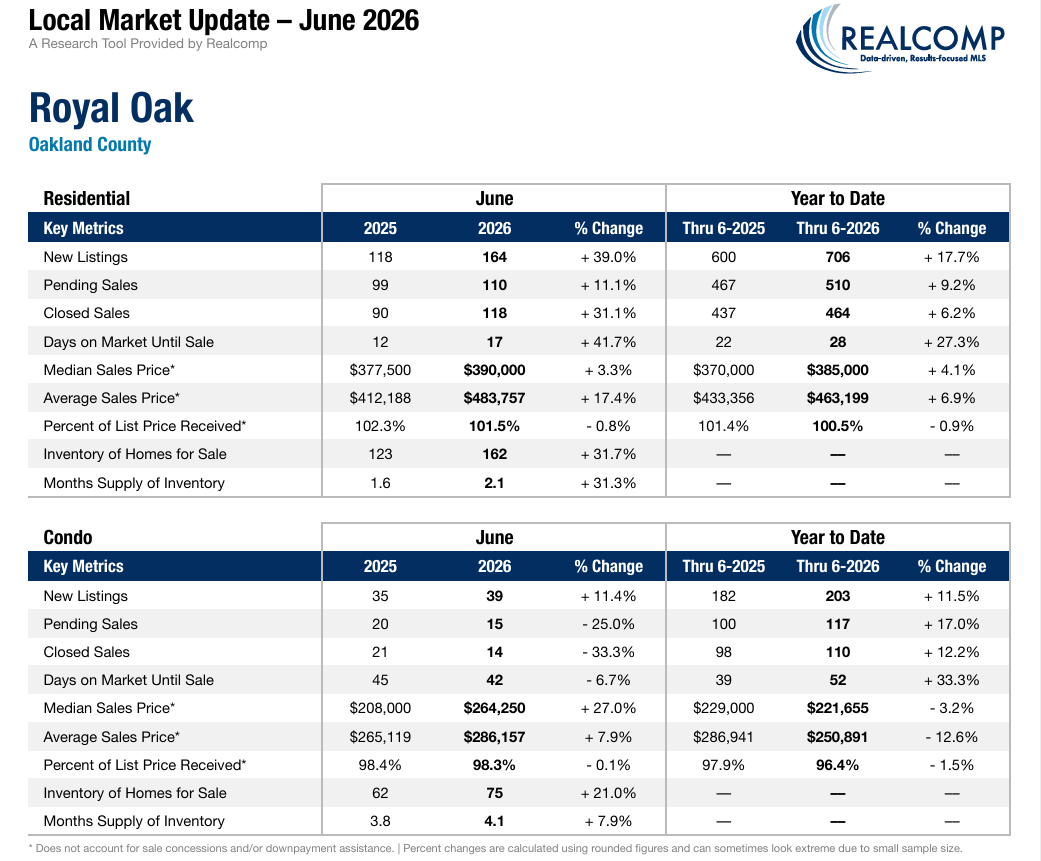
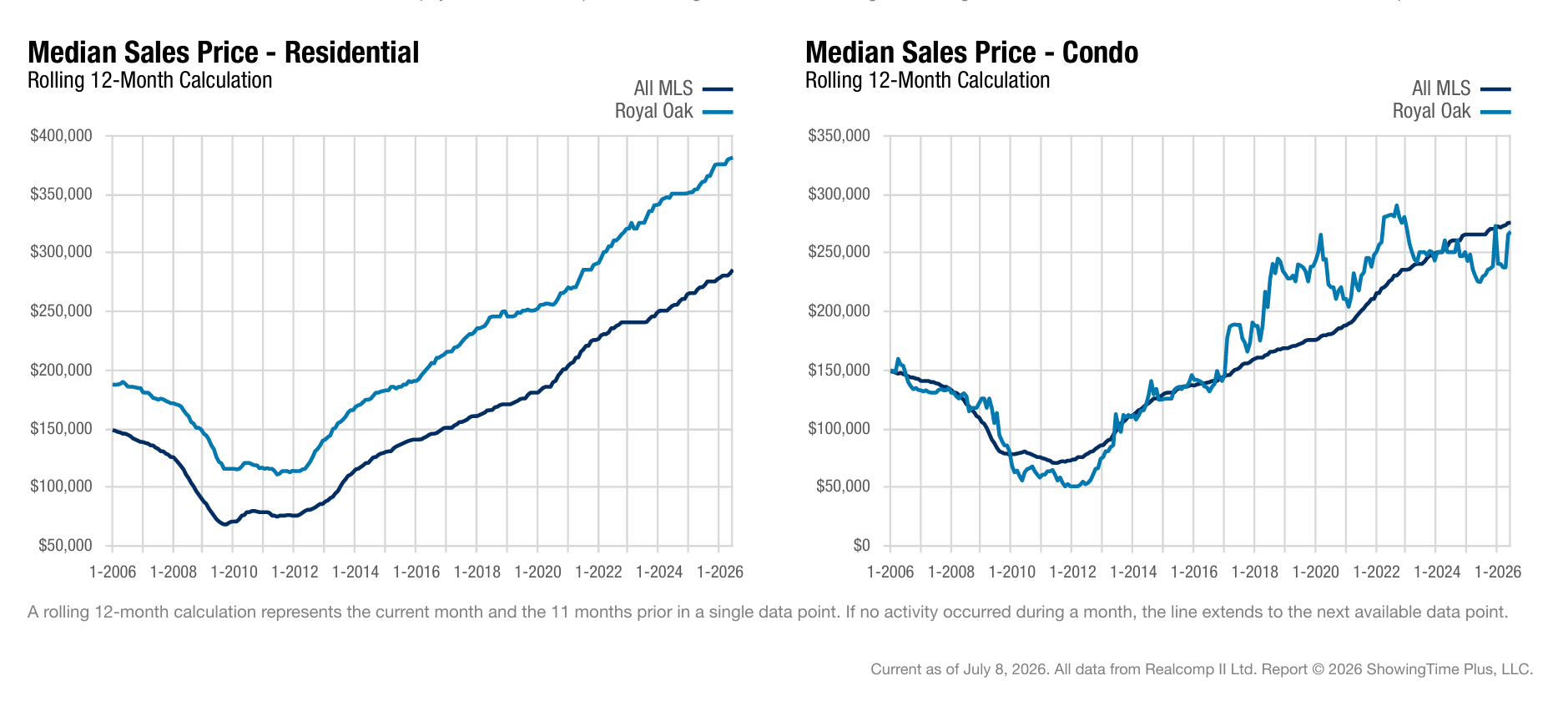
Figure 1. June 2026 Royal Oak Residential Market Snapshot (Source: Realcomp MLS)
In June 2026, Royal Oak recorded:
Source: Realcomp MLS, June 2026 Royal Oak Local Market Update.
At first glance, sellers may see 101.5% of list price received and think:
Royal Oak homes are selling over asking. Why not start higher?
But that's exactly where statistics need interpretation.
That number does not tell us that every Royal Oak home sold over asking.
It doesn't tell us that buyers will pay any price a seller chooses.
And it doesn't mean pricing higher creates a stronger outcome.
Look at what else was happening.
New residential listings increased 39% compared with June 2025.
Inventory increased 31.7%.
Months supply increased from 1.6 months to 2.1 months.
And days on market increased from 12 days to 17 days.
Buyers had more homes entering the market and more inventory available to compare.
More choices make positioning more important—not less.
That's why I don't look at a statistic like 101.5% and conclude we should simply increase the asking price.
I want to understand why certain homes generated strong buyer response and where your home fits against the choices buyers have right now.
You can follow those changes each month in my Royal Oak Real Estate Market Update, where I interpret what the latest local numbers actually mean for homeowners.
List Price Is a Positioning Decision Before It's a Negotiating Decision
This is where Articles 83, 86 and 87 all come together.
In How Do I Price My Home to Sell in Royal Oak, Michigan?, I explain why pricing is a science.
We're looking at market value.
Competition.
Condition.
Buyer expectations.
And the position we want the home to occupy when it launches.
Then in What Happens If I Price My Home Too High in Royal Oak, Michigan?, we looked at what happens when the price and buyer perception don't align.
And in Should I Price My Home Below Market Value to Get Multiple Offers in Royal Oak, Michigan?, we looked at the opposite strategy—intentionally pricing aggressively to create an opportunity for competition.
Neither approach changes the underlying principle:
The list price positions the home in the market.
That's its first job.
Negotiation comes later.
And there has to be a buyer interested enough to start that negotiation.
This is why I would rather determine where the home should compete first and develop our negotiation strategy from there.
Because once the home launches, buyers aren't thinking about the seller's negotiating plan.
They're deciding whether the home deserves their attention.
Buyers Don't Negotiate Against Your Bottom Line
There's another part of this conversation sellers need to understand.
The buyer doesn't know your number.
They don't know you would happily accept $475,000.
They don't know the extra $24,000 was added simply because you wanted room to negotiate.
They see:
$499,000.
And that's the number they respond to.
This is also why understanding your home's actual market position before listing matters so much.
In What Is My Home Worth in Royal Oak, Michigan?, I explain why a Zestimate, assessed value, appraisal and actual market value can all produce different numbers.
The goal isn't to choose the highest number and then create space underneath it.
The goal is to understand where qualified buyers are likely to perceive value.
Your financial goals absolutely matter.
I want to know what you owe.
What you hope to net.
What you need for your next move.
And what selling costs may affect your proceeds.
But those numbers help us determine whether the sale works for you.
They don't determine what the buyer believes the property is worth.
The buyer negotiates against their perception of value—not your bottom line.
Negotiating Leverage Starts Before the Offer
This is where I think sellers sometimes have the negotiation backward.
They think leverage begins when the first offer arrives.
I believe it starts earlier.
It starts with how the home is prepared.
How it's presented.
Where it's priced.
How it's marketed.
How many buyers discover it.
And how the home compares once those buyers start making decisions.
In How Will My Home Be Marketed to Attract Buyers in Royal Oak, Michigan?, I explain why the MLS creates availability but repeated exposure helps create buyer demand.
That's important here because a seller's strongest negotiating position usually isn't created by simply asking for more money.
It's created when a buyer believes:
I want this home.
And it becomes even stronger when more than one buyer reaches that conclusion.
That's leverage.
A strategically positioned home can create a reason for buyers to engage.
An artificially inflated price can do the opposite.
You don't create negotiating leverage by building extra dollars into the list price.
You create leverage by giving buyers a reason to begin the negotiation in the first place.
The Signature by Lisa Negotiating Leverage Framework
When sellers tell me they want to leave room to negotiate, I don't immediately think about how much we should add to the price.
I think about where our negotiating leverage is actually going to come from.
For me, that comes down to five things:
Position
How does your home compare with the other properties buyers can purchase at the same price?
Perception
When buyers see the price, photography, condition and features, do they believe the value is there?
Exposure
Are enough qualified buyers actually seeing the home?
Desire
Once buyers experience the home online and in person, do they want it enough to act?
Competition
Does the market give the buyer another reason to act because someone else may want the home too?
Position. Perception. Exposure. Desire. Competition.
That's negotiating leverage.
Notice what's not on that list:
Extra money added to the asking price.
The seller doesn't gain leverage simply because we gave ourselves $20,000 or $25,000 to negotiate away later.
Leverage develops when buyers believe the home is worth pursuing.
And that begins long before an offer reaches my inbox.
The Better Question Isn't “How Much Room Should We Leave?”
I would rather have a seller ask me:
“Where should we position the home so buyers respond?”
That's the conversation.
Because once we understand your home's value, the competition and current buyer expectations, we can make a deliberate pricing decision.
Maybe that means pricing close to where we believe market value sits.
Maybe market conditions support a more aggressive strategy.
Maybe there's enough buyer demand to position the home in a way that encourages competition.
That's why Should I Price My Home Below Market Value to Get Multiple Offers in Royal Oak, Michigan? is the other side of this exact conversation.
In that article, I explain why a lower list price can create attention—but cannot guarantee multiple offers.
Here, we're looking at the opposite assumption:
A higher list price can create negotiating room—but cannot guarantee a negotiation.
Two completely different strategies.
Same principle.
Price intentionally based on what you're trying to accomplish.
Not because we're assuming buyers will behave the way we hope they will.
What Happens When an Offer Actually Arrives?
This is where I do want negotiating room.
Inside the actual negotiation.
Now we have information.
We know a buyer wants the home.
We know what they're willing to offer.
We know their financing.
We know their proposed closing date.
We know whether they're asking for seller concessions.
We know their inspection terms.
We know whether there's an appraisal contingency.
We know what they're requesting for occupancy.
And now we can evaluate the entire offer instead of trying to predict the negotiation before a buyer even exists.
This is one thing I've learned from negotiating transactions throughout Metro Detroit:
The purchase price is only one part of an offer.
A buyer may offer less money with cleaner terms.
Another buyer may offer more but request concessions.
A buyer may give the seller exactly the closing or occupancy timeline they need.
Another may have stronger financing or offer terms that reduce uncertainty.
That's why the goal isn't simply to protect the asking price.
The goal is to negotiate the strongest overall outcome for the seller.
And sometimes that means negotiating something other than price.
Your Asking Price and Your Bottom Line Are Different Numbers
This is also where sellers can accidentally combine two separate conversations.
What is my home worth?
and
How much do I need to walk away with?
They're both important.
But they're not the same question.
Your mortgage payoff matters.
Your selling expenses matter.
Your next purchase matters.
Your financial goals matter.
That's why How Much Does It Cost to Sell a Home in Royal Oak, Michigan? is an important part of the planning process. Understanding transfer taxes, title expenses, negotiated concessions and other potential selling costs helps you estimate your proceeds before you list.
But your desired net proceeds don't determine market value.
The buyer isn't evaluating your mortgage balance.
They're evaluating your house.
That's why I want those conversations separated before we determine the pricing strategy.
First:
What does the market tell us about the home's value?
Then:
What could that sale price mean for your net proceeds?
Then you can make an informed decision about whether the numbers work for you.
That's clarity.
What If the Buyer Does Write Below Asking?
Of course buyers sometimes write below the list price.
I negotiate those offers regularly.
And a below-asking offer doesn't automatically mean the buyer isn't serious.
It means we now have information.
How far below?
What are the terms?
How long has the property been on the market?
What showing activity have we had?
Are other buyers interested?
Has buyer feedback consistently supported the asking price?
What else is competing with us?
Has something changed in the market since we launched?
Those questions help determine how I approach the negotiation.
Maybe we counter.
Maybe we hold firm.
Maybe another term matters more than the difference in price.
Maybe the buyer's offer is giving us information about how the market currently perceives the home.
That's exactly why What Happens If I Price My Home Too High in Royal Oak, Michigan? matters here.
In that article, I explain why market response has to be interpreted.
One below-asking offer doesn't automatically prove the home is overpriced.
But repeated buyer behavior can tell us something.
The market doesn't speak through one number.
It speaks through patterns.
My job is to recognize them.
Negotiating From Strength Looks Different
I would rather negotiate from this position:
Buyers saw the home.
They understood the value.
They wanted to see it.
They walked through it.
They decided they wanted it.
And then they wrote.
Now we have a negotiation.
That's fundamentally different from pricing high and waiting for someone to challenge the number.
And it connects directly to preparation and presentation.
In How to Prepare Your Home for Sale in Royal Oak, Michigan, I explain why preparation isn't about making a home perfect. It's about helping buyers feel confident about what they're seeing.
That confidence carries into negotiation.
The same is true of marketing.
As I explain in How Will My Home Be Marketed to Attract Buyers in Royal Oak, Michigan?, the MLS creates availability, while repeated exposure creates opportunities for buyers to discover and engage with the property.
When preparation, price and marketing work together, we're not trying to manufacture negotiating room.
We're trying to create buyer interest worth negotiating over.
That's a much stronger position.
The Signature by Lisa Perspective
I don't want to price your home based on the assumption that a buyer will negotiate us back to where we should have started.
That's backwards.
I want to understand where your home belongs in the market first.
What is it worth?
What else can the buyer purchase?
Where are buyers searching?
What expectations come with this price point?
What does the current Royal Oak market tell us?
Then we position the home intentionally.
Because buyers don't know that we secretly want $475,000 when we're asking them for $499,000.
They only see the $499,000 home.
And they decide whether it's worth pursuing.
That's why I challenge the phrase:
“Let's leave room to negotiate.”
Leave room where?
With a buyer who hasn't seen the listing because it's outside their search?
With a buyer who believes another $500,000 home offers more value?
With a buyer who decides to wait for a price reduction?
Or with a buyer who simply moves on?
You can't negotiate with a buyer who never engages.
I would rather earn the negotiation.
Position the home correctly.
Create buyer confidence.
Generate exposure.
Give buyers a reason to act.
Then negotiate from actual interest—not hypothetical room built into the price.
That's the difference.
Frequently Asked Questions
Should I price my house higher to leave room to negotiate?
Not simply for the purpose of creating negotiating room. Pricing above the home's supported market position can reduce the number of buyers who see the property and change the homes you're competing against. A stronger strategy is to establish the home's market position first and negotiate once an interested buyer actually submits an offer.
Will buyers make an offer if they think my home is overpriced?
Some buyers will, but many may not. Buyers who believe the gap between the asking price and perceived value is too large may wait for a price reduction, choose another property or never schedule a showing. An asking price does not guarantee that a buyer will begin a negotiation.
Can pricing too high keep buyers from seeing my home?
Yes. Many buyers receive automated MLS searches based on specific price ranges. If a buyer's search stops at $475,000 and your home is listed at $499,000, the property may fall outside that search even if the buyer could have been interested at a lower price.
What happens if a buyer offers below my asking price?
A below-asking offer can be evaluated and negotiated based on the price, terms, current market activity, showing feedback, competition and your selling goals. One below-asking offer does not automatically mean a home is overpriced, but buyer response over time can provide valuable information.
Should I automatically reject an offer below asking price?
No. The entire offer should be evaluated. Purchase price matters, but financing, appraisal terms, inspection contingencies, seller concessions, closing timeline, occupancy and other terms can affect the overall strength of an offer.
How do I know what price to list my Royal Oak home for?
Start with recent comparable sales, current competition, condition, location, buyer expectations and current market demand. How Do I Price My Home to Sell in Royal Oak, Michigan? explains how those factors work together to establish a strategic market position rather than simply choosing an asking price.
Conclusion
Leaving room to negotiate sounds logical.
Start a little higher.
Let the buyer come in lower.
Meet somewhere in the middle.
But that strategy assumes something we can't control:
That the buyer will write the offer.
Some won't.
Some won't see the home.
Some will compare it against stronger competition.
And some will simply decide the value isn't there.
That's why I believe the better strategy is to position the home where the market supports it and build negotiating leverage through buyer interest.
Because the goal isn't to leave room between two numbers.
The goal is to give the buyer a reason to start the conversation.
Closing Thoughts
There is one thought I want Royal Oak sellers to remember from this article:
You can't leave room for a negotiation that never begins.
Your list price isn't simply the number at the top of the listing.
It determines who may see your home.
What properties buyers compare it against.
What expectations they bring to the showing.
And whether they believe the home deserves their attention.
Price creates the position.
Buyer interest creates the negotiation.
Don't confuse the two.
Find Out What Your Royal Oak Home Is Worth
Before deciding whether you need “room to negotiate,” start with the question that comes first:
Where does your home actually fit in today's Royal Oak market?
I'll look at comparable sales, current competition, condition, location and buyer expectations to help you understand your home's potential market position.
👉 Find Out What Your Royal Oak Home Is Worth
One clear next step.
Then we can determine the strategy.
About Lisa A. Mills
Lisa A. Mills is a REALTOR®, founder of Signature by Lisa, and is affiliated with National Realty Centers | Powered by JMG. She specializes in helping Metro Detroit homeowners confidently navigate life's transitions through strategic planning, local market expertise, and innovative digital marketing.
Known as The Calm Strategist When Life Shifts, Lisa believes selling a home begins with understanding—not assumptions. Through thoughtful preparation, strategic pricing, and a focus on buyer confidence, she helps homeowners make informed decisions that lead to stronger outcomes.