Pricing below market value can be an effective strategy.
Sellers, listen up first.
A lower list price can absolutely create attention.
But attention and demand are not the same thing.
Sometimes buyers see a home priced noticeably below the competition and wonder why it's priced so low.
Is there something wrong with it?
Does it need more work than the photos show?
Is the seller expecting a bidding war?
Then there's another piece sellers need to understand.
The expectation created online has to match what the buyer experiences when they walk through the front door.
Your photography, presentation, marketing and list price begin shaping a buyer's perception before they ever schedule a showing.
If you're using a below-market list price to attract more buyers with the goal of creating multiple offers, those buyers still have to walk into the home and believe the value is there.
The condition matters.
The layout matters.
The flow matters.
The location matters.
The competition matters.
Because a lower price may get more buyers through the door. It cannot make them want the house once they're standing inside it.
That's why pricing below market value isn't the strategy by itself.
It's one part of the strategy.
Multiple offers require multiple buyers who see the home, experience the home and decide it's worth competing for.
Pricing below market value can create the opportunity for competition. Buyer perception determines whether that competition actually develops.
The assumption sounds simple:
Price the home below market value.
More buyers will see it.
More buyers will schedule showings.
Multiple buyers will write offers.
Competition will drive the price back up.
And the seller walks away with the highest possible price.
Can that happen? Absolutely.
But there's a critical part of that strategy sellers need to understand.
The market isn't obligated to bid your home back up.
A seller can choose the list price.
A seller cannot choose how many buyers will want the home.
That's why I don't believe the conversation should simply be:
“How low should we price it?”
The better question is:
“What would need to be true about this home and this market for that pricing strategy to work?”
That's a very different conversation.
Because if the strategy depends on competition, we need enough qualified buyers to see the home, perceive value and decide they're willing to compete for it.
One buyer doesn't create a bidding war.
Multiple motivated buyers do.
Royal Oak Market Snapshot
Before deciding whether pricing below market value makes sense, we have to understand the market we're asking to create competition within.
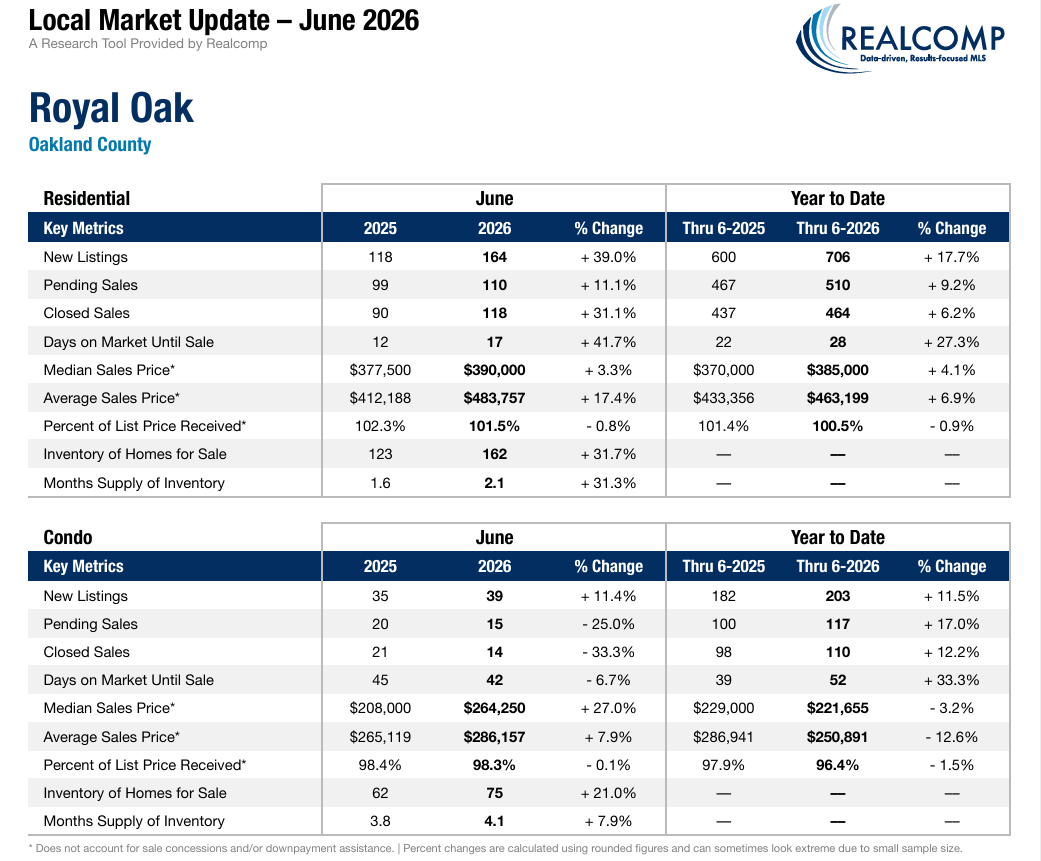
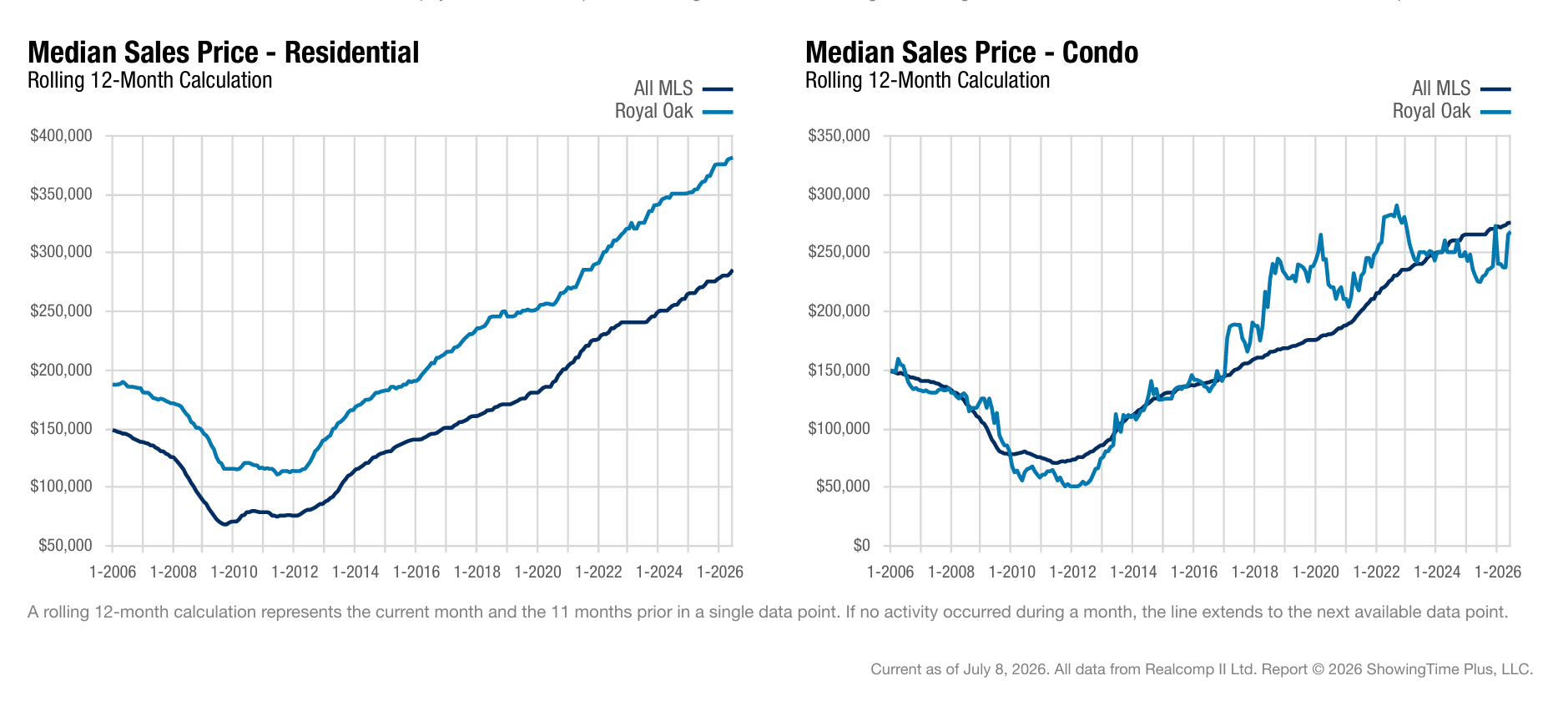
Figure 1. June 2026 Royal Oak Residential Market Snapshot (Source: Realcomp MLS)
In June 2026, the average residential sale price in Royal Oak was $483,757.
But just as I explained in What Is My Home Worth in Royal Oak, Michigan?, an average sale price doesn't determine the value of an individual home.
It gives us market context.
To determine whether an aggressive pricing strategy makes sense, I want to know much more.
What homes are currently competing for the same buyer?
How many buyers are active in this price range?
What have similar homes recently sold for?
What condition were those homes in?
How quickly are comparable properties attracting offers?
And what does your home offer that could make several buyers decide:
“I don't want to lose this one.”
That's the environment a multiple-offer strategy needs.
The price may get their attention.
The home still has to earn their response.
For a deeper look at how I establish that initial position, How Do I Price My Home to Sell in Royal Oak, Michigan? explains why pricing is a science built around market value, competition, buyer expectations and momentum—not simply choosing a number.
Price Is a Lever. It Isn't the Entire Strategy.
I think this is where the below-market pricing conversation often becomes too focused on one number.
Price is powerful.
It influences which buyers discover the home.
It affects perceived value.
It can widen the buyer pool.
And a strategically aggressive price can create urgency.
But price can't fix everything else.
It can't improve the condition of the home.
It can't change an awkward floor plan.
It can't move the property to a different location.
It can't make the photography accurately represent a home if the presentation isn't there.
And it can't manufacture emotional connection once buyers walk through the door.
That's why preparation matters before the pricing conversation is finalized.
In How to Prepare Your Home for Sale in Royal Oak, Michigan, I explain why the goal isn't to make your home perfect. It's to remove the distractions and uncertainty that can interfere with buyer confidence.
The same principle applies to repairs. What Repairs Should You Make Before Selling Your Home in Royal Oak? explains why the home's actual condition—not a generic repair checklist—should help determine where your preparation dollars are best spent.
When we're intentionally using price to create attention, those decisions become even more important.
Because we're setting an expectation.
The Photos and the Front Door Need to Tell the Same Story
This matters more than sellers sometimes realize.
A buyer's first showing often begins long before they pull into the driveway.
It starts with the first listing photo.
Then the next one.
Then the kitchen.
The bedrooms.
The backyard.
The description.
The price.
Maybe they see a listing video.
Maybe one of my digital ads puts the property in front of them again.
By the time that buyer schedules a showing, they've already formed an expectation about the home.
Then they open the front door.
That's the moment the online perception meets reality.
If the home feels as good—or better—than the buyer expected, the strategy becomes stronger.
If the photography made the rooms appear dramatically larger...
If deferred maintenance becomes obvious...
If the condition doesn't match the presentation...
Or if the flow of the home feels very different from what the buyer imagined...
The buyer begins recalculating value.
That's why I don't look at professional photography as a way to make a home appear to be something it isn't.
The goal is to present the home at its best while still allowing the buyer experience to match the expectation we've created online.
That consistency builds confidence.
And confidence matters when we're asking buyers to compete.
Getting More Buyers Through the Door Is Only Step One
This is also why marketing and pricing have to work together.
In How Will My Home Be Marketed to Attract Buyers in Royal Oak, Michigan?, I explain the difference between making a home available and deliberately creating repeated opportunities for buyers to discover it.
If we're going to use a below-market pricing strategy to generate attention, I want the marketing strategy working alongside it.
We need buyers to know the opportunity exists.
But then something else has to happen.
They have to want it.
Think about the progression:
Attention gets the click.
Presentation earns the showing.
The in-person experience builds buyer confidence.
Buyer desire creates the possibility of competition.
And when several buyers reach that point at approximately the same time—
that's when multiple offers can develop.
The price helped open the door.
It didn't create everything that happened afterward.
What If the Buyers Don't Bid It Back Up?
This is the part of the strategy I believe sellers need to discuss before agreeing to it.
Let's say we believe your home could reasonably support a higher market value, but we intentionally list below that range because we're trying to generate substantial activity and multiple offers.
What happens if the market doesn't respond the way we expected?
What if three buyers don't write?
What if ten don't write?
What if one buyer writes?
That doesn't automatically mean you're required to accept the offer. The terms of any offer still need to be evaluated and negotiated.
But it does mean the assumption behind the pricing strategy didn't develop the way we anticipated.
That's why I never want a seller agreeing to a below-market pricing strategy based solely on:
“Don't worry. The buyers will bid it up.”
Maybe they will.
But that's not a strategy I would present as a guarantee.
In What Happens If I Price My Home Too High in Royal Oak, Michigan?, I explain the risk on the other side of the pricing conversation: starting too high and assuming you can simply reduce later.
The lesson from both strategies is the same.
Price intentionally.
Understand what you're trying to accomplish.
Understand what needs to happen for the strategy to succeed.
And then watch what the market actually does.
The Signature by Lisa Multiple-Offer Framework
If we're considering pricing below market value as a strategy, I want to look beyond the list price.
For competition to develop, several things need to work together:
Position
Where does the home sit compared with the other choices buyers have right now?
Presentation
Does the online presentation create an accurate and compelling expectation of what buyers will experience in person?
Price
Does the list price create enough perceived value to capture attention and encourage buyers to act?
Exposure
Are we putting the home in front of enough of the right buyers to give the strategy an opportunity to work?
Buyer Experience
When buyers actually walk through the home, does their experience support—or exceed—the expectation we created online?
Demand
Are there enough buyers who want the property enough to compete for it?
Position. Presentation. Price. Exposure. Experience. Demand.
Those pieces work together.
Take one away and the outcome can change.
That's why I don't believe a multiple-offer strategy begins and ends with:
“Let's price it low.”
The price is one lever.
The strategy is everything surrounding it.
Multiple Offers Are About More Than the Highest Price
Let's say the strategy works.
Your home launches.
The marketing generates attention.
Showings begin.
And multiple offers arrive.
Now we have another decision to make.
The highest offer isn't automatically the best offer.
Price matters.
But so do the terms.
Financing.
Appraisal.
Inspection.
Seller concessions.
Occupancy.
Closing timeline.
Earnest money.
Contingencies.
And the buyer's overall ability to successfully get to the closing table.
A buyer offering the highest price with complicated terms or significant contingencies may not create the strongest overall outcome for the seller.
This is where the conversation shifts from creating competition to evaluating competition.
Because the goal isn't simply to say:
“We got multiple offers.”
The goal is to use that competition strategically and determine which offer gives the seller the strongest combination of price, terms and certainty.
A Bidding War Doesn't Automatically Establish Market Value
There's another distinction worth understanding.
A list price is an asking price.
An offer is what one buyer is willing to pay.
Market value develops from what qualified buyers are willing to pay within the context of the current market.
And when financing is involved, there may eventually be another opinion of value:
the appraisal.
A competitive multiple-offer situation can absolutely push a sale price above the original asking price.
But a high offer doesn't eliminate the possibility of an appraisal issue.
That matters when evaluating offers.
If a buyer offers significantly above the list price, I want to understand how that offer is structured.
Is there an appraisal contingency?
Is there an appraisal guarantee?
Does the buyer have sufficient funds to cover a potential appraisal gap?
How strong is the financing?
What happens if the property doesn't appraise at the contract price?
These are questions that become particularly important when a below-market pricing strategy successfully generates competition.
Getting the price up is one thing.
Protecting the transaction once it gets there is another.
The Market Has to Support the Strategy
There are markets where an aggressive pricing strategy can be incredibly effective.
There are also markets where it may create activity without creating competition.
That's why I don't believe in applying the same pricing formula to every Royal Oak home.
Buyer demand changes.
Inventory changes.
Interest rates influence affordability.
New listings enter the market.
Homes go pending.
Buyers change their expectations.
Even two similar homes listed several weeks apart can experience different levels of demand.
That's why the current Royal Oak Market Update matters when we're preparing to sell.
I want to understand what's happening now, not simply what worked for another seller six months ago.
And I certainly don't want to assume that because another home received ten offers, yours automatically will too.
Their competition may have been different.
Their condition may have been different.
Their price point may have attracted a larger buyer pool.
Their location may have created stronger demand.
Their market moment was theirs.
We need to understand yours.
The Signature by Lisa Perspective
I don't have a philosophical problem with pricing below market value.
I have a problem with presenting it as though the outcome is guaranteed.
There's a difference.
If the market conditions support the strategy, the home is positioned properly, the presentation creates the right expectation and we have enough buyer demand, an aggressive list price can be a powerful lever.
But I want the seller to understand why we're doing it.
What are we trying to accomplish?
What needs to happen for it to work?
What are the risks?
And what will we do if buyer response is different from what we anticipated?
That's strategy.
Not:
“We'll price it low and let the buyers bid it up.”
Because buyers aren't part of our plan simply because we want them to be.
They have their own expectations.
Their own budgets.
Their own choices.
And their own perception of value.
Pricing below market value can create the opportunity for competition. Buyer perception determines whether that competition actually develops.
That's the conversation I want sellers to understand before we ever choose the number.
Frequently Asked Questions
Should I price my house below market value to get multiple offers?
Pricing below market value can be an effective strategy when market conditions, buyer demand, the home's condition and the overall presentation support it. A lower price may attract more attention and showings, but it cannot guarantee multiple offers. Buyers still have to perceive enough value in the home to compete for it.
Does pricing a house lower create a bidding war?
Not automatically. A lower list price can increase attention and potentially widen the buyer pool, but a bidding war requires multiple motivated buyers who actually want the property. Price can create an opportunity for competition; it cannot manufacture buyer demand.
Can pricing my home too low make buyers suspicious?
It can. Some buyers may wonder why a home appears noticeably underpriced compared with competing properties. They may question whether there are condition issues, deferred maintenance or another reason for the lower price. This is why the home's presentation, photography and marketing should support the pricing strategy.
What happens if I price below market value and only receive one offer?
Receiving only one offer means the anticipated competition did not develop. You are not automatically required to accept that offer. The offer can still be evaluated and negotiated based on price, terms and your selling goals.
Does professional photography matter when trying to create multiple offers?
Yes. Photography begins shaping buyer expectations before they visit the property. The goal is to present the home at its best while accurately representing what buyers will experience in person. If the online presentation and the in-person experience don't align, buyer confidence can change.
Is the highest offer always the best offer?
No. The highest price is only one component of an offer. Financing, appraisal terms, inspection contingencies, seller concessions, occupancy, earnest money and the likelihood of successfully reaching closing should all be considered when evaluating competing offers.
Closing Thoughts
Pricing below market value can work.
It can create attention.
It can increase showing activity.
And under the right circumstances, it can help create the conditions for multiple offers.
But the list price doesn't get to decide what happens next.
Buyers do.
They see the photos.
They compare the competition.
They walk through the front door.
They experience the condition, layout and flow.
And then they decide whether the value they expected to find is actually there.
That's why I don't believe the goal should simply be to get as many buyers through the door as possible.
The goal is to create an experience worth competing for.
Find Out What Your Royal Oak Home Is Worth
Before deciding whether to price at market value, above it or strategically below it, start by understanding where your home fits in today's Royal Oak market.
That means looking beyond an online estimate.
We need to consider comparable sales, current competition, condition, location, buyer expectations and current demand.
👉 Find Out What Your Royal Oak Home Is Worth
Once we understand the value, we can decide how to use the price strategically.
About Lisa A. Mills
Lisa A. Mills is a REALTOR®, founder of Signature by Lisa, and is affiliated with National Realty Centers | Powered by JMG. She specializes in helping Metro Detroit homeowners confidently navigate life's transitions through strategic planning, local market expertise, and innovative digital marketing.
Known as The Calm Strategist When Life Shifts, Lisa believes selling a home begins with understanding—not assumptions. Through thoughtful preparation, strategic pricing, and a focus on buyer confidence, she helps homeowners make informed decisions that lead to stronger outcomes.